The average tree removal cost in New York City is about $845, but this price can vary from as low as $225 for a small, easy removal to more than $2,200, and in Manhattan, you can expect to be at the high end of things. The answer is very simple: Manhattan has the nation’s highest labor costs and the most compact working conditions, both of which drive up the cost of tree removal. This guide for 2026 takes apart all the factors that affect pricing, what a fair quote for Manhattan should include, and where to watch for hidden fees when calling out a quote.
The Short Answer: What Tree Removal Costs in Manhattan
Most Manhattan homeowners will face a tree removal cost between $500 and $3,000, and when a crane, permits or emergency response is included the price will climb past $5,000 for genuine large or hard to reach trees. Citywide estimates place the average removal at around $845 with a common range of $225 to $2,252, other sources in the area believe it could actually range from $250 to $10,000 — this is exactly because of the complexity of Manhattan jobs. How your tree will fit into that range is dependent on five factors: size, accessibility, condition, permits and the extras you select. Here’s each one.
1. Tree Size: The Single Biggest Cost Factor
Height and trunk diameter drive more of your bill than anything else, because a taller, heavier tree means more crew hours, more rigging, and more debris to haul. Most companies price roughly by size bracket:
- Small trees (under 30 feet): about $150 to $500. Think ornamental or young trees in a townhouse garden.
- Medium trees (30 to 60 feet): about $500 to $1,200. The most common residential removal, usually a 3-to-5-hour job for a small crew.
- Large trees (60 to 80 feet): roughly $1,200 to $3,000, since these weigh thousands of pounds and produce enormous volumes of wood.
- Extra-large trees (over 80 feet): $2,500 and up, often requiring crane assistance.
A general guideline is $10-$15 per foot of height for a basic project, but for difficult situations, it may be $25 per foot of height. Trunk diameter is equally important; a thick hardwood of the same height as a thin hardwood requires a much longer time to section.
2. Access and Location: Why Manhattan Costs More
This is the factor that separates a Manhattan quote from a suburban one. Stronger regulations, less equipment space and potential need for traffic control result in higher costs for urban removals. There are very few Manhattan properties where you can remove at a low cost, due to open yard access. However, crews are typically at work:
- Between buildings or over a roofline, where the tree can’t be simply cut down but needs to be broken down bit by bit and lowered by rope, hours of skilled labour are added.
- No driveway or street-side access, every piece of wood is hand-carried out of the building or over a wall in the rear garden of a brownstone or townhouse.
- Beside power lines, or the street, where the crane must be able to extend above the roofline from the front, and lane closures or traffic control may be necessary, which can add a few hundred dollars.
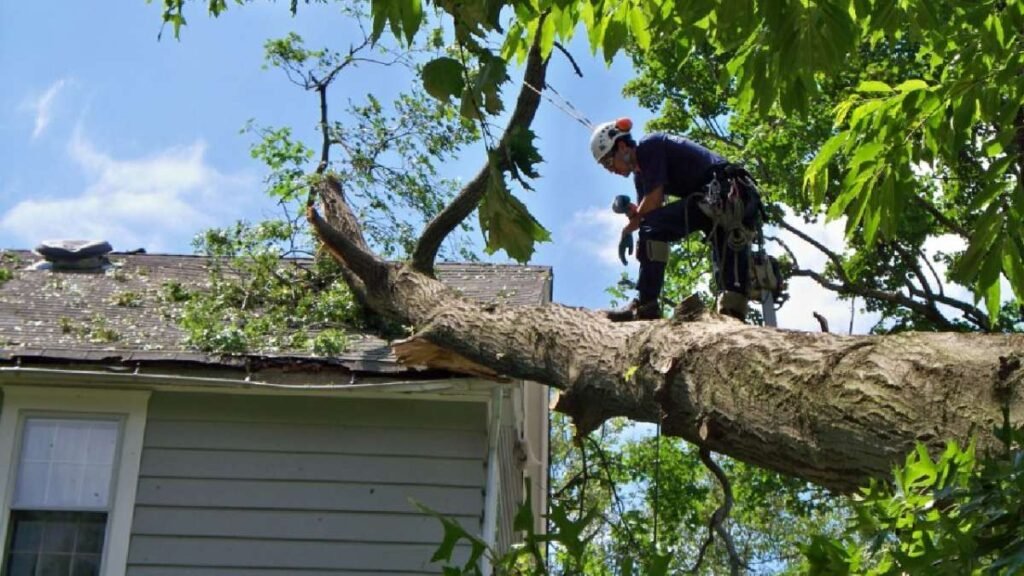
If a crane must be used, expect to pay an additional $500-$2,500 per day to the base removal cost, and be aware that the most challenging crane jobs may cost up to $6000-$7000. In Manhattan, a limitation in the availability of trees is frequently the explanation for a medium priced like a large tree.
3. Tree Condition and Species
Most commonly, a dead, diseased or storm damaged tree is more expensive to remove than a healthy tree of the same size. The dead wood is brittle, unpredictable and unsafe to climb on and may result in additional rigging and hazard precautions, which can cost up to 15% of the total cost. There is also a species factor: hardwoods such as oak and maple are heavier than softwoods such as pine, and as such more expensive to cut in a removal routine, which would result in a higher cost for a comparable oak removal vs. pine removal. Another reason why on site Quotes are superior to phone quotes is because common street and garden trees, such as Manhattan’s London planetrees, honeylocust and callery pears, can range greatly in size and difficulty.
4. Permits: Street Tree vs. Private Tree
It is the area that most Manhattan homeowners may fall into, and it affects both the personnel and money.
Trees are usually not in need of a permit for removal from the NYC Department of Parks and Recreation (DPR), if the tree has all its roots on your own property. However, street trees (those in the sidewalk strip between the curb and the property line) belong to the City and no one is permitted to prune or remove them without having a written DPR Forestry permit, even if they are right in front of your house, and the roots are raising your stoop. Cutting or damaging a City tree without a permit is a violation of the NYC Administrative Code – and the fines are not hypothetical.
A licensed private contractor (not you) applies for the permit for street trees, and permits for non-urgent work for street trees will generally be approved within 2-6 weeks. In addition, if the job involves a dumpster or wood chipper being parked on the street, a NYC Department of Transportation container permit is normally about $30-$150, and is not your responsibility. A good Manhattan crew will know what permits are relevant and incorporate that process in their job.
5. Add-Ons: Stump Grinding, Debris Hauling, and Cleanup
Base removal usually covers taking the tree down not everything after. Common add-ons include:
- Stump grinding or removal: typically an extra $100 to $400, sometimes more for large or old stumps, and almost always quoted separately.
- Debris hauling: in NYC, roughly $85 to $285 per dump trip, depending on volume.
Always ask for a line-item estimate rather than a single flat number, so you can see whether stump work, hauling, and cleanup are included or billed on top.
6. Emergency and After-Hours Removal
Urgent service, when a tree has fallen during a storm or is in a critical condition to be removed by the tree removal service, costs a lot. Emergency removals generally cost 25% to 100% more than a scheduled removal job, and the increased cost of complex, urgent situations can reach $5,000 due to after hours labor, hazard assessment and high demand following a storm. Where a downed tree has damaged a covered structure, it may be covered by your homeowners insurance, but note that standard policies only have a cap of a few hundred dollars up to about $1,000 for removal of tree debris, so check your policy before assuming that the removal will be paid for.
Sample Manhattan Price Scenarios
To make the ranges concrete:
- A 25-foot ornamental in an accessible front garden: roughly $400 to $700.
- A 45-foot honeylocust in a rear garden with hand-carry access only: roughly $1,200 to $2,200.
- A 70-foot tree over a roofline needing a crane and traffic control: roughly $3,500 to $6,500-plus.
How to Avoid Overpaying
Get at least three written, itemized quotes, and make sure each one covers the same scope a low number that excludes stump grinding, hauling, or permits often ends up costing more. Make sure the company is insured and if the work involves street trees, they will obtain the DPR permit. Planning the work to take place in the dormant fall or winter with leaves down and crews not as busy can also reduce the cost, compared to a busy spring or summer job.
When considering removal in Manhattan, Manhattan Tree Removal offers on-site estimates and can take care of the permitting, removal, and cleanup from beginning to end eliminating any unexpected charges and giving you a clear, itemized estimate of what the job will cost in Manhattan before any work is done.